Table of contents
- Strengthening identity protection to reduce breach risk across client networks
- Automating access decisions with Entra ID Protection’s risk-based controls
- Stopping credential-based attacks before they disrupt operations
- Unifying device, user, and data protection for complete visibility
- Building a zero-trust foundation that scales with every environment
- Frequently Asked Questions
Entra ID protection is changing the way MSPs keep client environments secure. Syncro’s Identity Management and Security Baselines allow MSPs to easily configure and monitor Entra ID security settings.
As identity-based attacks grow, old security layers just aren’t enough to protect users, devices, and data across today’s hybrid networks. With a strong identity protection strategy, MSPs can cut down on credential risks, control access more tightly, and build a true zero trust environment — all without adding extra layers of complexity.
In this blog, you will discover:
- How identity protection strategies reduce breach risks and improve client trust
- Ways to automate access control and strengthen compliance with minimal overhead
- Techniques to prevent credential misuse and maintain uptime across every environment
- Methods to unify device, user, and data protection for end-to-end control
- Steps to implement a scalable zero-trust framework across every managed environment
Strengthening identity protection to reduce breach risk across client networks
Every login is a doorway — and attackers are always looking for one that’s left open.
As client environments spread across cloud platforms and remote devices, protecting identities becomes essential. Identity protection helps verify who’s logging in, what they’re doing, and whether their actions align with normal behavior. For managed service providers, that means stronger control, quicker detection, and less exposure to risk.
Key benefits include:
- Proactive threat detection: Keep an eye on login patterns, device health, and where users are signing in from. MSPs can spot unusual activity before it turns into a problem. Risky sessions can be flagged and isolated automatically, without getting in the way of legitimate users.
- Reduced credential misuse: Dynamic authentication ensures that even if passwords are compromised, unauthorized access is blocked through layered verification and continuous session evaluation.
- Automated remediation: When suspicious activity is detected, automated responses—such as sign-in challenges, MFA prompts, or session termination—remove the need for manual intervention and accelerate containment.
- Consistent visibility across clients: Centralized identity dashboards give service providers a single pane of glass for user activity, making it easier to manage and secure multiple client environments simultaneously.
- Increased client trust and retention: Demonstrating advanced identity protection reinforces the value of a provider’s security framework, giving clients confidence in their ongoing protection and compliance readiness.
By focusing on real-time identity insights and automation, MSPs can deliver measurable risk reduction while simplifying day-to-day security management.
Automating access decisions with Entra ID Protection’s risk-based controls
Identity threats move fast — too fast for manual checks to keep up. Entra ID Protection gives security teams a way to see risky sign-ins and compromised accounts as they happen, then automatically apply the right access controls. What used to be a slow, reactive process becomes a real-time layer of protection that keeps users safe without getting in their way.
Why automation matters
Every account added or removed by hand introduces potential oversight. Automating access management enforces least privilege by ensuring users only have the permissions they need, when they need them. It also closes the loop faster when employees change roles, leave an organization, or require temporary system access.
Core outcomes of automated access management
- Stronger compliance and audit readiness: Automatically log and report every access change for simplified audits and faster compliance verification.
- Immediate onboarding and deprovisioning: Grant and revoke credentials in seconds across all connected systems, eliminating orphaned accounts and lingering permissions.
- Adaptive access policies: Dynamic access rules adjust to user behavior, risk level, and device trust signals, ensuring real-time control without constant admin input.
- Reduced technician workload: Integrated automation frees IT teams to focus on higher-value projects, increasing both efficiency and scalability.
The bigger impact
Automation strengthens security and streamlines service delivery. When identity and access controls are built into everyday processes, MSPs can onboard clients faster, stay compliant more easily, and cut down on operational risk.
Stopping credential-based attacks before they disrupt operations
Credential theft is still one of the easiest ways for attackers to break in—and one of the hardest for teams to catch.
Weak or reused passwords, shared accounts, and unmonitored sign-ins give bad actors quiet access long before anyone notices. Entra ID Protection helps close those gaps by spotting unusual sign-ins and blocking credential misuse before it spreads across the network.
How proactive detection works
Continuous monitoring and behavioral analytics catch red flags early—like suspicious logins, strange device activity, or sign-ins from places a user couldn’t possibly be. When something looks off, the system steps in automatically, prompting reauthentication, blocking sessions, or resetting passwords before an attacker can take hold—all without anyone needing to jump in manually.
Some of the main benefits of proactive credential defense include:
- Early attack disruption: By identifying suspicious logins in real time, IT teams can stop unauthorized access before sensitive data or systems are compromised.
- Continuous behavioral learning: Machine learning models refine detection accuracy over time, distinguishing legitimate user behavior from emerging attack tactics.
- Comprehensive visibility: Correlating identity data across endpoints, cloud apps, and directories helps MSPs uncover attack paths that would otherwise go unnoticed.
- Streamlined incident response: Automated alerts and risk-based workflows ensure that every action—whether quarantine or user verification—follows a defined and efficient playbook.
When detection, analysis, and fixes happen almost instantly, MSPs can stay ahead of problems instead of reacting after the fact. The result is less downtime for clients and a steadier, more reliable service experience.
Unifying device, user, and data protection for complete visibility
Security gaps often show up when separate tools handle users, devices, and data on their own. A unified identity protection framework ties everything together—who’s logging in, which device they’re using, and how they’re interacting with sensitive data. This connected approach gives service providers a clear, ongoing view of every access point and every action.
Unified protection delivers three advantages:
1. Cross-environment visibility
Rather than juggling separate dashboards for identity, device health, and data compliance, a unified view aggregates all risk signals. MSPs can quickly spot inconsistencies, track compromised endpoints, and verify compliance status from one interface.
2. Intelligent correlation of identity and device signals
By connecting identity behavior with endpoint health, service providers can tell if a login from a trusted user is actually coming from a compromised device or network. That context makes it possible to score risk instantly and ensure devices meet security baselines before accessing data.
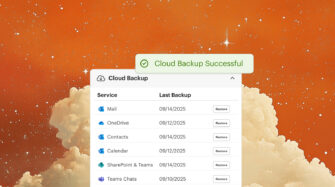
3. Automated Cloud Backup
Data governance policies automatically follow user activity—no matter where files live or how they’re accessed. Whether users are working remotely or on-prem, access control and encryption ensure data remains protected end to end.
When visibility spans every layer—identity, device, and data—security moves from reacting to predicting. This connected approach improves compliance and makes managing each client environment easier and more efficient.
Building a zero-trust foundation that scales with every environment
Keeping multiple clients secure doesn’t have to be complicated. With Syncro, service providers can weave identity protection right into their everyday workflows—building a zero trust foundation that’s automated, scalable, and easy to measure. Every login, ticket, and device interaction works together as part of one connected security layer that keeps threats out and everything running smoothly.
Syncro’s all-in-one platform allows MSPs to:
- Consolidate service delivery: Use a unified platform combining RMM (remote monitoring & management), PSA (ticketing, billing, workflows), and Microsoft 365 management so devices, tickets, automation, and back-office come together.
- Improve responsiveness: Configure real-time alerts, automated workflows, remote access (via built-in Splashtop), and scripted remediation so you can escalate or resolve issues quickly.
- Enhance asset and endpoint visibility: Monitor endpoints (including unlimited devices), deploy patches, track scripts and inventory, and manage assets (including warranty tracking) from one console.
- Provide measurable client value: Generate reports, automate billing and invoicing, display uptime/issue-resolution metrics, and deliver dashboards that help you communicate the impact of your service.
Zero trust is a mindset. When Syncro runs at the center of your operations, you can give clients enterprise-level protection without losing the agility that makes your MSP stand out.
Ready to turn identity protection into a business advantage? Request a demo or start your free trial and start unifying security, automation, and insight today—see how seamless zero trust can be.
Frequently Asked Questions
Entra ID protection is a cloud-based identity security solution that detects, analyzes, and responds to risky sign-ins and compromised credentials. It helps managed service providers (MSPs) prevent unauthorized access and enforce zero trust policies across client environments.
For MSPs, Entra ID protection adds continuous visibility into user behavior, device health, and access risks. Automating authentication policies and remediation reduces manual oversight, stops credential-based attacks, and strengthens compliance across all managed clients.
MSPs gain proactive threat detection, automated risk response, simplified access management, and centralized reporting. These capabilities lower breach risk, streamline technician workloads, and provide measurable proof of security performance to clients.
Entra ID protection enforces zero trust by continuously validating identity, device posture, and session risk before granting access. Every login is verified, every session monitored, and every anomaly addressed automatically—ensuring only trusted users and devices connect to client systems.
Identity-based attacks are rising faster than traditional defenses can respond. Entra ID protection gives MSPs a scalable, automated way to safeguard client environments, reduce human error, and deliver enterprise-grade protection without adding operational complexity.

Share
Related Resources